
For Heatly fourth graders, science learning recently moved beyond the classroom and onto the banks of the Hudson River.
As part of their study of ecosystems, students put their observation and investigation skills into practice through a hands-on learning experience focused on the river in their own community. Working alongside educators from the Children’s Museum at Saratoga, students participated in Hudson River Snapshot Day, a statewide event in which students and educators collect scientific data to create a “snapshot” of the Hudson River on a single day. The information gathered contributes to research efforts supported by the New York State Department of Environmental Conservation and Columbia University’s Lamont-Doherty Earth Observatory.
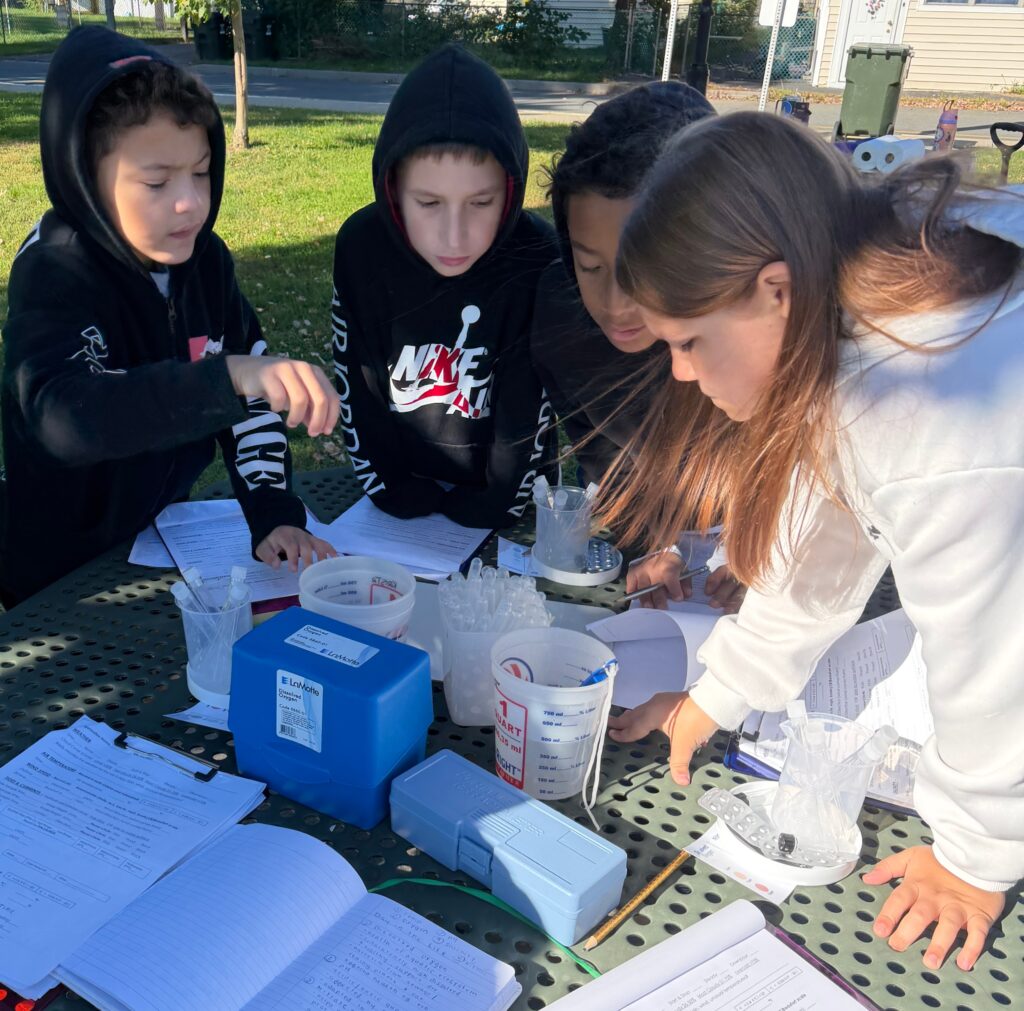
The field experience connected directly to lessons students have been studying in class, including food chains, the flow of matter and energy, decomposition, and the matter cycle. Through Heatly’s new science curriculum, students learn how organisms depend on one another and how energy and matter move through the living and nonliving parts of an ecosystem. The curriculum is aligned with the Next Generation Science Standards (NGSS), which emphasize investigation, evidence-based reasoning and real-world application of scientific concepts.
“This experience gave students an opportunity to apply skills they are developing during the academic day to a real-world setting, helping make classroom learning more tangible and relevant,” said fourth grade teacher Sodelys Hilario.
Before visiting the river, students learned to identify biotic (living) factors such as fish, plants, algae, insects and other animals, as well as abiotic (nonliving) factors including water, sunlight, temperature and dissolved oxygen. They also explored how organisms meet their habitat needs, how food chains transfer energy, and how the structures of plants and animals help them survive.
Prior to the event, Children’s Museum educators visited students to explain the scientific purpose of the project and the data collection methods they would use. On Snapshot Day, students traveled to the river’s edge adjacent to the school, where they tested water samples for pH, nitrates and phosphates, measured environmental conditions such as current and wind speed, and recorded observations about the ecosystem around them.
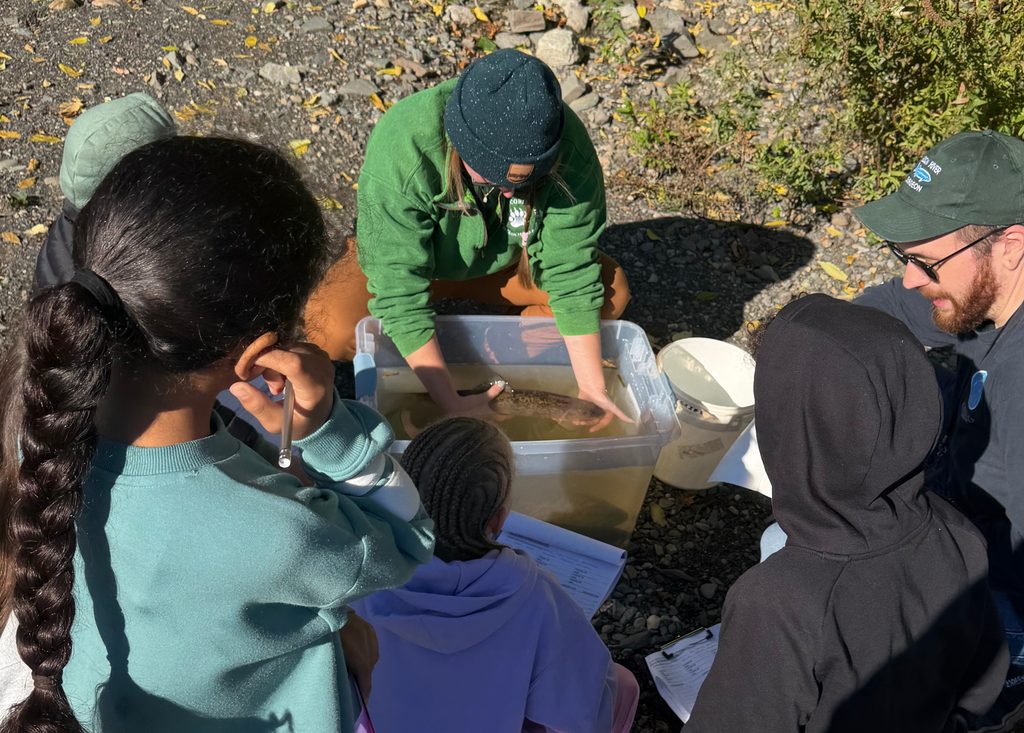
Along the riverbank, students searched for signs of aquatic life, observed fish and other organisms, identified species by their physical characteristics, and documented the connections between the plants, animals and environmental conditions that make up the Hudson River ecosystem.
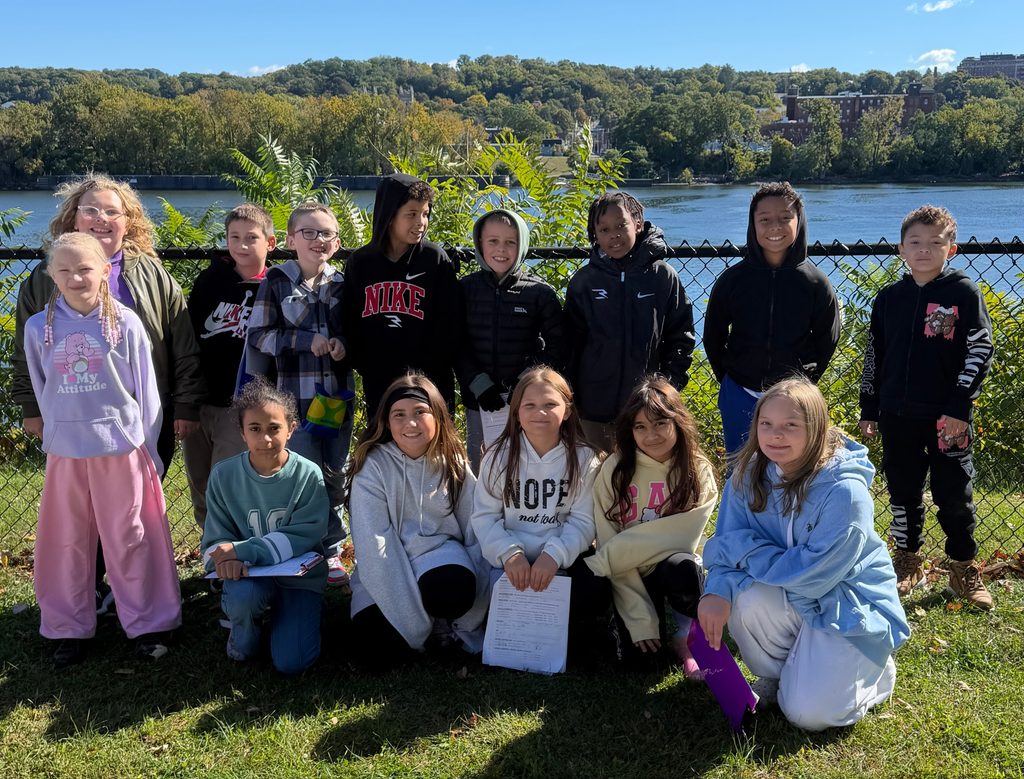
Learning in a real-world setting helped deepen students’ understanding of ecosystems by allowing them to see firsthand the relationships between organisms and their habitats. Students were surprised by some of the things they discovered. “The Hudson River is 18 feet deep,” said Brison, while Owen found it interesting that “fish clean the river.” Kaeson was surprised to learn the river’s temperature was about 60 degrees during their visit.
Students also enjoyed the opportunity to closely observe wildlife. “My favorite observation was all of the different types of fish that were in the bucket,” said Clementine. Allison said her favorite observation was seeing an eel, while Darian enjoyed helping release fish back into the river after they were examined.
The experience also sparked new curiosity. Students left with questions about the ecosystem and the river’s wildlife, including Allison’s wonder about how long it would take to swim the length of the Hudson River and Brady’s question about the largest fish ever caught there.
For Heatly students, the Hudson River became more than a local landmark. It became a living classroom, offering a powerful opportunity to connect scientific concepts with the world around them while contributing meaningful data to a statewide scientific effort. By combining hands-on investigation with real scientific research, the experience helped spark curiosity about the natural world and inspired students to keep asking questions about the ecosystem in their own backyard.